40 of 4,700: What EPA Method 1633 Measures and What It Misses
EPA Method 1633 precisely measures 40 PFAS compounds. The OECD list of PFAS contains more than 4,700. In Burlington, NC, the gap was measured at 12 million parts per trillion of precursors that standard targeted analysis could not see.
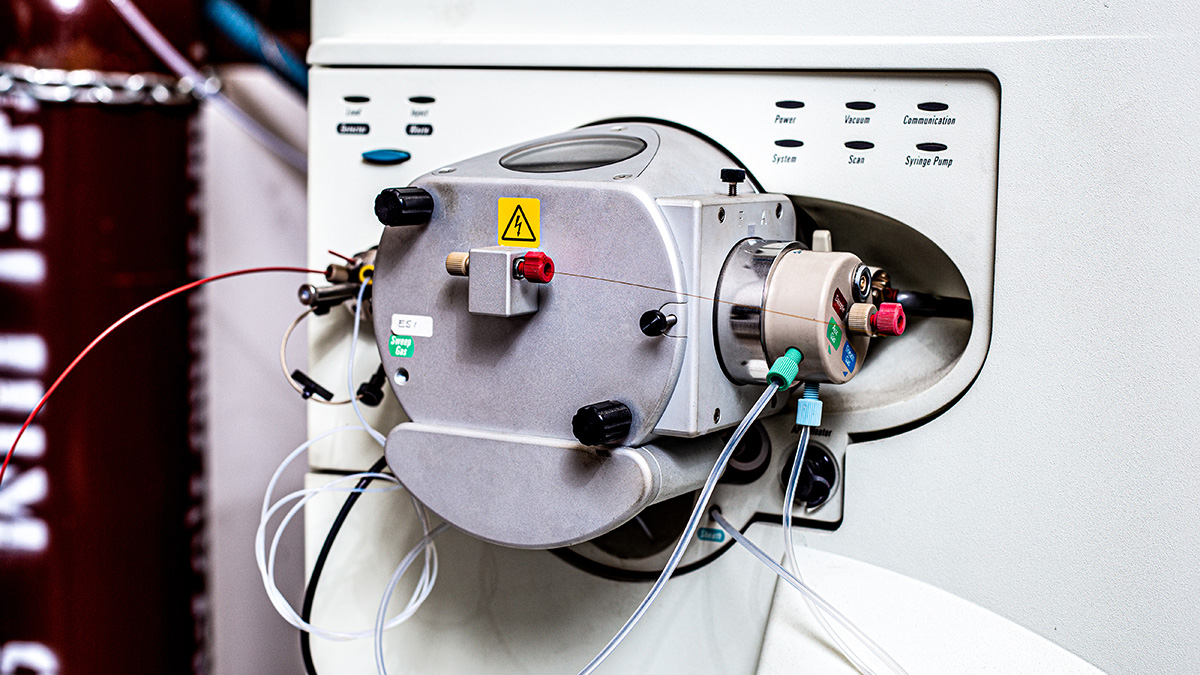
EPA Method 1633 is the workhorse analytical method for PFAS in environmental samples. It is precise, multi-laboratory validated, and the method EPA recommends as "the best analytical methods currently available for monitoring of effluent for PFAS." It measures 40 specific PFAS compounds across eight matrices. The OECD list of PFAS contains more than 4,700 individual compounds, and PubChem holds more than 220,000 entries that meet the OECD's structural definition. The gap between what Method 1633 measures and what may exist in a sample is not a flaw in the method. It is a function of how the method is scoped, and it has practical consequences for site investigation, NPDES compliance, and treatment system design. In Burlington, North Carolina, that gap had a number: precursor concentrations of up to 12 million parts per trillion (approximately 3 million times EPA's drinking water regulatory limit) entered the local wastewater treatment plant invisibly to standard targeted analysis, where the plant's thermal treatment process was actively converting them into more dangerous regulated forms. This article walks through what Method 1633 actually does, the size of the PFAS universe it sits inside, the complementary analytical approaches that exist to bridge the gap, and what the Burlington case demonstrates when targeted methods are treated as a complete site characterization.
What Method 1633 Actually Does
EPA released the final validated version of Method 1633 on January 31, 2024. A revision, Method 1633A, was released on December 5, 2024, incorporating minor changes in response to stakeholder feedback (US EPA, 2026). Both versions measure the same 40 specific PFAS compounds and use the same fundamental analytical approach: liquid chromatography-tandem mass spectrometry (LC-MS/MS) with isotope dilution quantitation. Isotope dilution uses stable-isotope-labeled analogs of target compounds as internal standards, which significantly reduces error from matrix effects and recovery variability. It is the gold standard for trace organic quantitation, and its inclusion in the method is what gives Method 1633 its precision (US EPA, 2026).
Method 1633A is validated across eight matrices: wastewater, surface water, groundwater, soil, biosolids, sediment, landfill leachate, and fish tissue. The multi-laboratory validation that supports the method tested ten laboratories against fifteen challenging aqueous matrices (six wastewaters, three surface waters, three groundwaters, and three landfill leachates), nine solid matrices (three soils, three sediments, and three biosolids), and three aquatic tissues. The standard sample size for aqueous analysis under Method 1633A is 500 mL (US EPA, 2026).
EPA's framing of the method is clear about its position in the regulatory framework. EPA describes Method 1633 and 1633A as "the best analytical methods currently available for monitoring of effluent for PFAS" in NPDES programs and pretreatment monitoring. At the same time, the agency notes that Method 1633 is not yet nationally required for Clean Water Act compliance monitoring; that status is pending promulgation through rulemaking. The proposed approval was published in December 2024 (docket EPA-HQ-OW-2024-0328) (US EPA, 2026). In practical terms, Method 1633 is the recommended method for PFAS effluent monitoring, used voluntarily and through permit-specific requirements, but the federal compliance trigger has not yet been pulled.
Within its scope, Method 1633 does what it is designed to do. The 40 compounds it measures include the legacy PFAS that dominate regulatory attention (PFOA, PFOS, PFHxS, PFNA, and others), short-chain replacements (PFBA, PFBS, and related compounds), and several precursors that the analytical chemistry community has prioritized for quantitation. For sites where the contamination profile is dominated by these 40 compounds, Method 1633 produces defensible, regulator-accepted numbers (US EPA, 2026).
The Size of the Universe
The number 40 has to be placed against the size of the PFAS universe to be useful. According to a 2023 review by Bugsel, Zweigle, and Zwiener published in Trends in Environmental Analytical Chemistry, PFAS comprise "more than 4,700 individual compounds" in the OECD compilation, spanning a wide variety of chemical compositions, molecular weights, and functional groups. Molecular weights of recognized PFAS range from 164 Da (perfluoropropionic acid) to more than 2,000 Da (phosphazenes used as reference compounds in mass spectrometry). Functional groups represented include carboxylic, sulfonic, and phosphoric acids, betaines, and phosphate esters (Bugsel et al., 2023).
The 4,700 number is the curated regulatory list. The structural definition is broader. PubChem shows "more than 220,000 entries for compounds that contain more than one fully fluorinated methyl or methylene group (CF2 or CF3) and are therefore considered PFAS according to the Organisation for Economic Co-operation and Development" (Bugsel et al., 2023). The wider count includes fluorinated pharmaceuticals and pesticides that meet the structural definition. In an EPA statement on PFAS analytical methods, the agency similarly acknowledges: "There are thousands of organofluorine compounds, which include PFAS, as well as fluorinated pharmaceuticals and pesticides" (US EPA, 2026).
The Bugsel review situates Method 1633 inside the broader category of standardized methods: "The focus of standardized methods for PFAS quantification is on perfluoroalkyl carboxylic acids (PFCAs) and perfluoroalkyl sulfonic acids (PFSAs), typically with much less than 50 analytes." Method 1633's 40 compounds fits squarely inside that bucket (Bugsel et al., 2023). The applications of the broader PFAS class are documented across "metal plating, firefighting foams, electronics, photolithography, hydraulic fluids, textiles, paper, leather, cosmetics and cleaning products" (Bugsel et al., 2023). Each of these industrial sectors contributes compounds that may or may not appear on the Method 1633 list.
| Universe | Number of PFAS Compounds | Source |
|---|---|---|
| EPA Method 1633 / 1633A (precisely measured) | 40 specific PFAS | US EPA, 2026 |
| Standardized methods generally (PFCAs and PFSAs focus) | Typically <50 analytes | Bugsel et al., 2023 |
| NTS workflows have identified to date | >750 PFAS across 130 chemical classes | Bugsel et al., 2023 |
| OECD curated PFAS list | >4,700 individual compounds | Bugsel et al., 2023 |
| PubChem entries under OECD structural definition | >220,000 entries | Bugsel et al., 2023 |
The OECD count is the curated regulatory list. The PubChem count uses the structural definition (compounds with more than one fully fluorinated methyl or methylene group) and includes fluorinated pharmaceuticals and pesticides.
The Bugsel review describes the analytical challenge as based on "the large number of single substances with quite different compound properties and the even larger number of transformation products, the lack of information on PFAS identity and application areas, and the scarcity of authentic standards" (Bugsel et al., 2023). Each of these factors limits how aggressively any standardized targeted method can expand its compound list. Authentic standards are required for confident identification and quantitation; without them, a method cannot reliably report a number for a compound. The scarcity of standards is one of the reasons standardized methods stay focused on a manageable set of well-characterized PFAS.
The TOP Assay as a Bridging Tool
Three categories of analytical approach exist to address what Method 1633 does not measure. The first is the Total Oxidizable Precursor (TOP) assay. A 2023 review in Environmental Science & Technology Letters by Ateia and colleagues (Ateia is affiliated with US EPA) describes the TOP assay's role: "Current analytical methods are capable of quantitatively measuring a number of specific PFASs, [but] they do not provide a complete picture of the thousands of PFASs that are utilized in commercial products and potentially released into the environment. These unmeasured PFASs include many PFAS precursors, which may be converted into related PFAS chemicals through oxidation. The total oxidizable precursor (TOP) assay offers a means of bridging this gap by oxidizing unknown PFAS precursors and intermediates and converting them into stable PFASs with established analytical standards" (Ateia et al., 2023).
The TOP assay does not identify the original precursor compounds. It oxidizes a sample, converting unknown precursors into a set of measurable perfluoroalkyl carboxylic acids, and quantifies the increase. The difference between the pre-oxidation PFAS measurement and the post-oxidation measurement provides a quantitative estimate of how much precursor mass was present in the sample, expressed in terminal-PFAS-equivalent units. For site investigation, this gives the practitioner a number that captures, in aggregate, the precursor load that a targeted method like 1633 would not report (Ateia et al., 2023).
Ateia and colleagues are direct about the assay's limitations. "The application of the TOP assay to samples from PFAS-contaminated sites has generated several new insights, but it has also presented various technical challenges for laboratories." Oxidation efficiency varies with matrix composition, scavenger species in the sample can suppress conversion, and incomplete oxidation can lead to underestimation of the true precursor load. Even so, the review identifies a more fundamental gap as the central problem: "Despite the increased number of literature studies that include the TOP assay, there is a critical and growing gap in the application of this method beyond researchers in academia" (Ateia et al., 2023). The TOP assay is well-developed in research labs. Routine commercial use in site investigation has lagged.
EPA's Aggregate Approach: Method 1621
The second complementary approach is aggregate-fluorine measurement. EPA has developed Method 1621, which quantifies adsorbable organic fluorine (AOF) in aqueous samples. AOF measures the total mass of fluorine in organofluorines that "adsorb to a carbon sorption media," without identifying specific compounds. The detection limit is approximately 1.5 ppb (1,500 ng/L), considerably higher than Method 1633's sub-1 ng/L sensitivity for targeted compounds but in a range that can detect aggregate fluorine loads in impacted wastewater and source waters (US EPA, 2026).
EPA describes the relationship between the two methods in direct terms: "Whereas Method 1633 precisely measures 40 specific PFAS in a variety of matrices, Method 1621 cannot distinguish which specific organofluorines are present" (US EPA, 2026). The two methods answer different questions. Method 1633 tells the practitioner which of 40 specific compounds are present and at what concentration. Method 1621 tells the practitioner whether the sample contains significant aggregate organofluorine that may include compounds Method 1633 does not measure.
Method 1621's multi-laboratory validation tested 22 individual PFAS, one mixture of 33 PFAS, one pharmaceutical compound, and one pesticide. Recovery performance varies with carbon chain length: "low recoveries...for organofluorine compounds containing less than four carbons...or for compounds containing more than eight carbons." The minimum recovery for the worst-performing PFAS in AOF testing was greater than 40% (US EPA, 2026). For comparison, Total Organic Fluorine (TOF) methods, which measure all organofluorine without the adsorption step, have detection limits greater than 400 ppb (US EPA, 2026). Method 1621's improvement over TOF is two orders of magnitude in sensitivity, with the trade-off that it excludes organofluorines that do not adsorb to the carbon sorption media.
EPA lists additional aggregate methods beyond 1621 and TOF: Extractable Organic Fluorine (EOF), the Total Oxidizable Precursor Assay (TOP), Particle-Induced Gamma-ray Emission (PIGE), and 19F NMR (US EPA, 2026). Each has its own scope, sensitivity, and matrix limitations. None alone provides a complete characterization. Taken together with Method 1633, they form a toolbox: the targeted method tells you what specific compounds are present; the aggregate methods tell you whether there is fluorinated mass the targeted method is not seeing.
Non-Targeted Screening by High-Resolution Mass Spectrometry
The third complementary approach is non-targeted screening (NTS) by high-resolution mass spectrometry (HRMS). NTS does not begin with a list of compounds to measure. It acquires high-resolution mass spectra across a broad mass range, then uses pattern-matching, isotope analysis, fragmentation data, and computational tools to prioritize peaks that may correspond to unidentified PFAS. The Bugsel review describes the technical baselines: HRMS data are typically acquired in a mass range between m/z 50 to 100 and 1,300, at a mass resolving power higher than 20,000 at m/z 500, and a mass accuracy between 1 and 10 ppm (Bugsel et al., 2023).
Confidence in NTS-based identifications is communicated through a standardized scheme. Schymanski and colleagues originally proposed a confidence scale (level 1a = confirmed by reference standard, down to level 5a/5b = exact mass match without further evidence), and Charbonnet and colleagues (2022) adapted the scheme specifically for PFAS. Higher confidence requires more corroborating evidence: a compound that appears in a homologous series of related PFAS, with MS2 fragmentation data consistent with the proposed structure, carries higher confidence than an exact-mass-only match (Bugsel et al., 2023).
The Bugsel review quantifies what NTS has produced to date: "Various applications of NTS workflows including data evaluation detected more than 750 PFAS from 130 chemical classes in environmental samples, biofluids, and commercial products." The same approaches "demonstrated the high complexity of the worldwide PFAS contamination" (Bugsel et al., 2023). NTS has expanded the catalog of identified environmental PFAS by an order of magnitude beyond what standardized targeted methods cover.
The barrier is practical rather than scientific. As Bugsel and colleagues note, "the access to instruments and techniques which are required for a sophisticated NTS remain limited" (Bugsel et al., 2023). High-resolution mass spectrometers capable of NTS workflows are expensive, the software and analyst expertise required to run them are not standard at most commercial environmental labs, and the resulting data sets require domain knowledge to interpret. NTS is not a substitute for Method 1633 in routine compliance monitoring. It is a complementary capability that is well-developed in academic and select research-grade commercial labs.
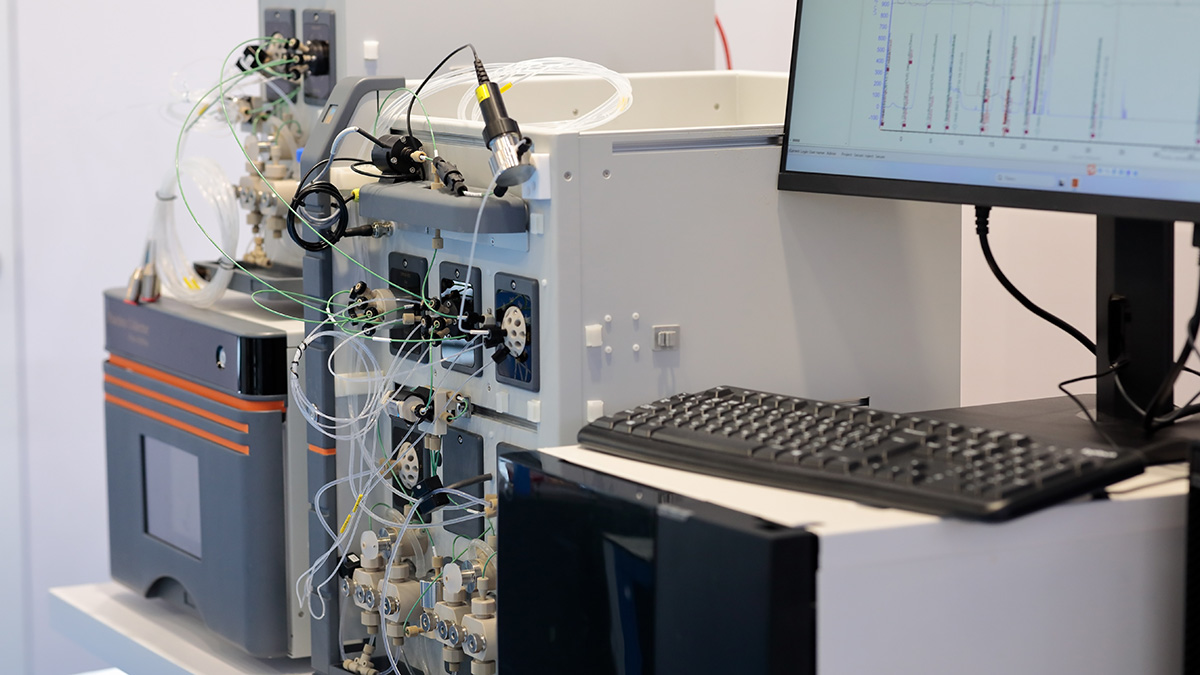
Burlington, NC: What Happens When 1633 Is the Only Lens
The practical consequence of the analytical gap is best illustrated by a 2025 finding from the Duke University Pratt School of Engineering. A team led by Prof. Lee Ferguson traced widespread PFAS contamination across North Carolina's Piedmont region back to a textile manufacturing plant in Burlington, NC. The source compounds were not PFOA, PFOS, or any of the other regulated PFAS that standardized targeted methods detect. They were solid nanoparticle PFAS precursors: insoluble side-chain fluorinated polymer nanoparticles that current standardized tests are not designed to identify (Duke Pratt, 2025).
The concentration of these precursor nanoparticles in the textile manufacturer's discharge to the Burlington sewer reached up to 12 million parts per trillion. That is approximately 3 million times greater than EPA's drinking water regulatory limit for PFOA (Duke Pratt, 2025). Standard analytical methods, including methods like 1633, were not seeing this material. What they would have reported is what they were designed to report: concentrations of the 40 specific compounds on the targeted list.
Two compounding problems emerged in the Burlington case. The first was that the precursors were invisible to standard analysis. The second was that the Burlington wastewater treatment plant was using a Zimpro thermal and pressure treatment process that was actively converting the precursors into the regulated PFAS forms that targeted methods do measure. Burlington's WWTP showed much higher PFAS coming out of the plant than going in (Duke Pratt, 2025). When the Duke lab simulated the Zimpro treatment in the laboratory on the textile manufacturer's wastewater samples, measured PFAS levels jumped by 50,000 to 80,000 percent (Duke Pratt, 2025).
"After turning all the available PFAS precursors into measurable forms of PFAS, the levels in one textile manufacturer's wastewater jumped 50,000 to 80,000 percent. I jumped out of my chair when I saw the results."
Prof. Ferguson framed the methodological lesson directly:
"We have some of the most sophisticated instruments in the world for PFAS analysis, and we couldn't detect these until we dramatically changed our approach. Sometimes we don't know what we don't know, and there is a lesson to be learned about blind spots in our analyses when it comes to looking for new PFAS in the environment."
The Burlington story has a constructive ending that reinforces the analytical-methods lesson. After Burlington used its Clean Water Act pretreatment authority to require the textile manufacturer to change its process, PFAS precursors entering the WWTP dropped by orders of magnitude. Burlington also shut off the Zimpro process, and measurable PFAS levels in the wastewater "came way down" (Duke Pratt, 2025). Source control combined with discontinuation of the precursor-transforming treatment step produced measurable reductions across the system. For the broader analytical question, see our prior analysis of PFAS in biosolids and the Duke Burlington finding, which examines the same case through the biosolids pathway that distributed the transformed PFAS across eastern North Carolina agricultural land.
What This Means for Site Investigation and Compliance
The Burlington case is a single example of a general principle. Method 1633 is precision for known PFAS. It is not a complete site characterization. For several categories of contaminated site, the gap between Method 1633's compound list and what may actually be present has practical consequences.
Sites with industrial-source contamination from precursor-heavy industries. Textiles, paper coatings, firefighting foams, electronics, metal plating, and other industrial sectors documented in the Bugsel review use PFAS chemistries that include precursors not on the Method 1633 list. A targeted-only analysis at such a site may show low or moderate PFAS concentrations while the underlying contamination is dominated by compounds the method does not measure. Adding a TOP assay or non-targeted screening to the analytical scope produces a more complete picture (Ateia et al., 2023; Bugsel et al., 2023).
Sites where treatment processes may transform precursors. The Burlington case is the documented example. Thermal treatment, oxidation, and certain biological treatment steps can convert precursors into terminal PFAS that targeted methods do measure. A monitoring program that samples only the targeted compounds at the treatment plant outlet may record higher numbers than the influent and misattribute the increase to treatment failure when the real story is in-process precursor transformation (Duke Pratt, 2025). The same principle applies in landfill leachate, which has been documented to undergo significant precursor transformation in storage and treatment; see our analysis of PFAS in landfill leachate.
NPDES permit holders with PFAS monitoring requirements. Method 1633 is the EPA-recommended method for NPDES monitoring of PFAS. For sites where the regulator has specified Method 1633 in the permit, that is the method of record. But for source characterization, treatment-effectiveness studies, and pretreatment program development, supplementing the targeted analysis with TOP assay or Method 1621 AOF screening produces information the permit-monitoring numbers do not contain. The Burlington WWTP used Clean Water Act pretreatment authority to address its industrial source once the precursor-conversion problem was identified; the same authority is available to other WWTPs facing similar industrial discharges (Duke Pratt, 2025; US EPA, 2026).
Site closure decisions, risk assessments, and remedial investigations. Sites where future land use, biosolids application, or treatment-system design depends on a complete PFAS characterization benefit from analytical scope that goes beyond Method 1633. Ateia and colleagues frame the practitioner's question directly: "The comprehensive characterization of per- and polyfluoroalkyl substances is necessary for the effective assessment and management of risk at contaminated sites" (Ateia et al., 2023). A targeted-only characterization is a partial characterization.
| Method | What It Measures | Detection Limit | Compound IDs? |
|---|---|---|---|
| EPA Method 1633 / 1633A | 40 specific PFAS (LC-MS/MS, isotope dilution) | <1 ng/L (aqueous, typical) | Yes, named compounds |
| EPA Method 1621 (AOF) | Adsorbable organic fluorine, aggregate | ~1.5 ppb (1,500 ng/L) | No, aggregate only |
| TOP Assay | Pre/post-oxidation PFAS, captures precursor load | Same as 1633 post-oxidation | Yes for terminals; no for original precursors |
| Non-Targeted Screening (HRMS) | Unknown PFAS via mass-defect and isotope patterns | Variable, compound-specific | Tentative; confidence-level dependent |
| Total Organic Fluorine (TOF) | All organofluorine, aggregate | >400 ppb | No, aggregate only |
Methods data from US EPA (2026) and Bugsel et al. (2023). Method 1633's detection limit is typical for the validated matrices; specific compound and matrix combinations vary.
EPA Method 1633 measures 40 of more than 4,700 PFAS in the OECD list, and that scope is a feature of the method, not a defect. The problem arises when the precision of 1633 is treated as completeness. For sites with industrial precursor inputs, treatment processes that may transform precursors, or remediation decisions that depend on full characterization, supplementing 1633 with the TOP assay, EPA Method 1621, or non-targeted HRMS screening is the difference between knowing what 40 compounds are in a sample and knowing what the sample actually contains.
Sources
- U.S. Environmental Protection Agency (2026). "CWA Analytical Methods for Per- and Polyfluorinated Alkyl Substances (PFAS)" and "Frequent Questions about PFAS Methods for NPDES Permits." Office of Water. Last updated February 25, 2026. CWA Analytical Methods for PFAS ; PFAS Methods FAQ for NPDES Permits. Method 1633A document: Method 1633A (December 5, 2024).
- Ateia, M., Chiang, D., Cashman, M., and Acheson, C. (2023). "Total Oxidizable Precursor (TOP) Assay: Best Practices, Capabilities and Limitations for PFAS Site Investigation and Remediation." Environmental Science & Technology Letters. Published March 9, 2023. https://doi.org/10.1021/acs.estlett.3c00061
- Bugsel, B., Zweigle, J., and Zwiener, C. (2023). "Nontarget screening strategies for PFAS prioritization and identification by high resolution mass spectrometry: A review." Trends in Environmental Analytical Chemistry, e00216. https://doi.org/10.1016/j.teac.2023.e00216
- Kingery, K. (2025). "Uncovering the Source of Widespread 'Forever Chemical' Contamination in North Carolina." Duke University Pratt School of Engineering. November 20, 2025. Duke Pratt School of Engineering. Underlying paper: Faught, P.W., Shojaei, M., Joyce, A.S., and Ferguson, P.L. (2025). "Colloidal Side-Chain Fluorinated Polymer Nanoparticles Are a Significant Source of Polyfluoroalkyl Substance Contamination in Textile Wastewater." Environmental Science & Technology Letters. DOI: 10.1021/acs.estlett.5c01014.
Need Site Characterization or Treatment Design That Sees Beyond the Targeted List?
PRM designs and deploys PFAS treatment systems for drinking water, groundwater, industrial process water, and AFFF-impacted sites. We work with consultants and site managers who need treatment systems sized to the contamination actually present, not just the compounds Method 1633 reports. For industrial-source sites, AFFF-impacted installations, and complex matrices where the analytical picture matters, PRM brings 36 years of treatment-system integration experience.
Contact Our Team