PFAS in Dairy: How Forever Chemicals Reach the Food Supply
PFAS-contaminated groundwater from Cannon Air Force Base destroyed a 3,665-cow New Mexico dairy, the visible US endpoint of a global PFAS-in-dairy pattern that traces back to upstream water, biosolids, and AFFF sources.
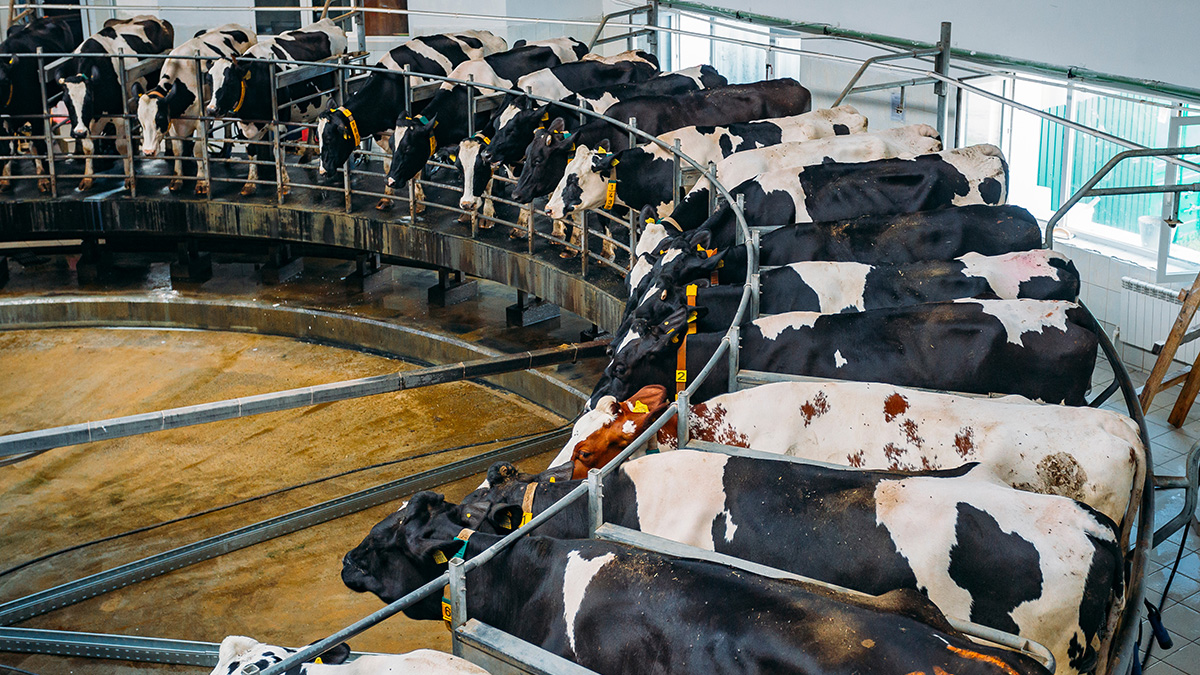
Groundwater plumes, biosolids spread on farmland, and stormwater runoff from AFFF-impacted sites all share an endpoint that upstream investigations often overlook: the food supply. Cows drink contaminated water and eat contaminated feed. PFAS bioaccumulates in their tissues and partitions into the milk they produce. The dairy that processes that milk into cheese, butter, yogurt, or infant formula concentrates the contamination further. Two 2025 peer-reviewed reviews drawing on more than 800 milk samples across four continents document the contamination as a global phenomenon. In Clovis, New Mexico, the same pathway closed with the euthanasia of an entire 3,665-cow herd at a fourth-generation family dairy after PFAS-contaminated groundwater from Cannon Air Force Base reached the property's drinking water wells. The Highland Dairy case is the visible US endpoint of a contamination chain that runs through industrial discharges, biosolids application sites, AFFF training areas, and stormwater outfalls.
The Global Picture
A 2025 review published in Science of the Total Environment by Khanashyam and colleagues compiled global data on PFAS in dairy products and identified contamination across all studied regions. PFOS concentrations in milk reported across the reviewed literature ranged from 0.003 ng/mL in Norway to 0.0245 ng/mL in China, with substantial regional variation in between. At a regional level, the reviewed data show Europe spanning 0.03 to 13.36 ng/mL, Asia 0.0 to 1.99 ng/mL, Africa 0.08 to 15.51 ng/mL, and North America at approximately 5 ng/mL (Khanashyam et al., 2025).
A parallel review published in Foods in June 2025 by Curci and colleagues focused more narrowly on milk, drawing on 22 published studies covering 824 milk samples and investigating up to 60 PFAS compounds. Across the studies they reviewed, PFOS and PFOA were detected in 100% of investigations, with PFOS typically showing higher detection frequency than PFOA. The highest national concentrations identified came from Italy (97 ng/L PFOS) and Germany (137 ng/kg as a sum of four main PFAS compounds) (Curci et al., 2025).
| Region or Country | Reported PFAS Concentration in Milk | Source |
|---|---|---|
| Europe (regional range) | 0.03 – 13.36 ng/mL | Khanashyam et al., 2025 |
| Asia (regional range) | 0.0 – 1.99 ng/mL | Khanashyam et al., 2025 |
| Africa (regional range) | 0.08 – 15.51 ng/mL | Khanashyam et al., 2025 |
| North America | ~5 ng/mL (dairy near contaminated military base, NM) | Khanashyam et al., 2025 |
| Italy (highest national) | 97 ng/L PFOS | Curci et al., 2025 |
| Germany (sum of 4 main PFAS) | 137 ng/kg | Curci et al., 2025 |
| Korea (PFOS + PFOA in milk products) | 0.09 – 7.27 ng/mL | Khanashyam et al., 2025 |
Compiled from two peer-reviewed 2025 reviews of global PFAS contamination in dairy.
National-level data illustrate how detection rates vary by sample type and country. A study of 107 raw milk samples in China found a 96.3% detection frequency for at least one PFAS, with a maximum PFOS concentration of 9.19 ng/g. In the Xinjiang region of China, 115 retail milk samples showed PFOA detection in 33% of samples and PFOS detection in 39.6%. South African dairy milk samples (n = 23) ranged from 0.08 to 15.51 ng/mL, with toddler intake estimated at 20.41 ng/kg body weight per day, the highest body-weight-normalized intake in the studies Curci and colleagues reviewed. In Poland, linear PFOS detection frequencies were 33% in cow milk, 76% in goat milk, and 93% in sheep milk, indicating substantial species-level variation (Curci et al., 2025).
A note on the data: Curci and colleagues explicitly flag that high milk-consuming nations including Sweden, the Netherlands, and Denmark are underrepresented in the published research literature, while lower-consumption countries such as China and South Africa are overrepresented (Curci et al., 2025). The global picture is incomplete in the places where exposure is likely highest.
The scale of the dairy sector establishes why this matters. Khanashyam and colleagues cite OECD data indicating that the global dairy sector sustains over 133 million farms with a turnover of approximately US$330 billion. Milk production is projected to increase 1.7% annually, reaching 981 million tonnes by 2028, with India and Pakistan together contributing more than half of the projected growth. In 2019, approximately 80% of the global population regularly consumed dairy products. High-income countries project approximately 0.4% annual growth in dairy consumption; low-income countries 1.5%, middle-income countries 2.0% (Khanashyam et al., 2025).
How PFAS Reaches the Dairy Supply
Khanashyam and colleagues identify four established pathways by which PFAS enter the dairy supply chain, and two emerging vectors that are less well documented (Khanashyam et al., 2025).
Contaminated drinking water for livestock. Cows drink water from wells, surface water, or municipal supplies, all of which may carry PFAS from industrial discharge, municipal wastewater, or runoff from areas where PFAS-containing products have been used. Studies cited in the Khanashyam review show that contaminated drinking water leads to detectable PFAS levels in milk (Khanashyam et al., 2025). In cases where the contamination source has been mapped, drinking water is often the dominant route, as the Highland Dairy case below illustrates.
PFAS in animal feed. Cattle feed grown on PFAS-contaminated soils, irrigated with PFAS-contaminated water, or amended with PFAS-laden biosolids carries PFAS into the animal through ingestion. For broader context on the biosolids pathway specifically, see our analysis of PFAS in biosolids and land-applied sewage sludge.
Chemical migration from food-contact packaging. PFAS-treated food packaging materials, including grease-resistant paper, wraps, and liners used in dairy packaging, can leach PFAS into the product they contain. EPA explicitly identifies food packaging materials including grease-resistant paper, microwave bags, and pizza boxes as exposure pathways in its current public-facing guidance (EPA, 2026).
Contact with fluoropolymer-coated processing equipment. Dairy processing equipment with fluoropolymer coatings (used for non-stick and anti-fouling properties) can transfer PFAS into the dairy product during processing (Khanashyam et al., 2025).
Two emerging vectors are less well documented but flagged in the recent literature. Microplastics, particularly synthetic polymers such as polyamides, are identified as potential vectors due to their strong adsorption capacity for PFAS, with the adsorption affinity affected by polymer type, PFAS polarity, and pH conditions. In arid and semi-arid regions, sand and dust storms have been identified as a significant but underexplored source of PFAS exposure, capable of mobilizing PFAS-laden dust over large distances and depositing it on agricultural areas including dairy farms (Khanashyam et al., 2025).
The contamination pathways do not operate in isolation. At a dairy near an AFFF-impacted military installation, the cow may be exposed simultaneously through groundwater-fed wells, hay grown on adjacent biosolids-amended fields, and dust deposition from windblown soil. Tracing the dominant pathway requires site-specific investigation, but at a single operation any one of these inputs is sufficient to put milk above an FDA screening level.
Highland Dairy and the Cannon AFB Plume
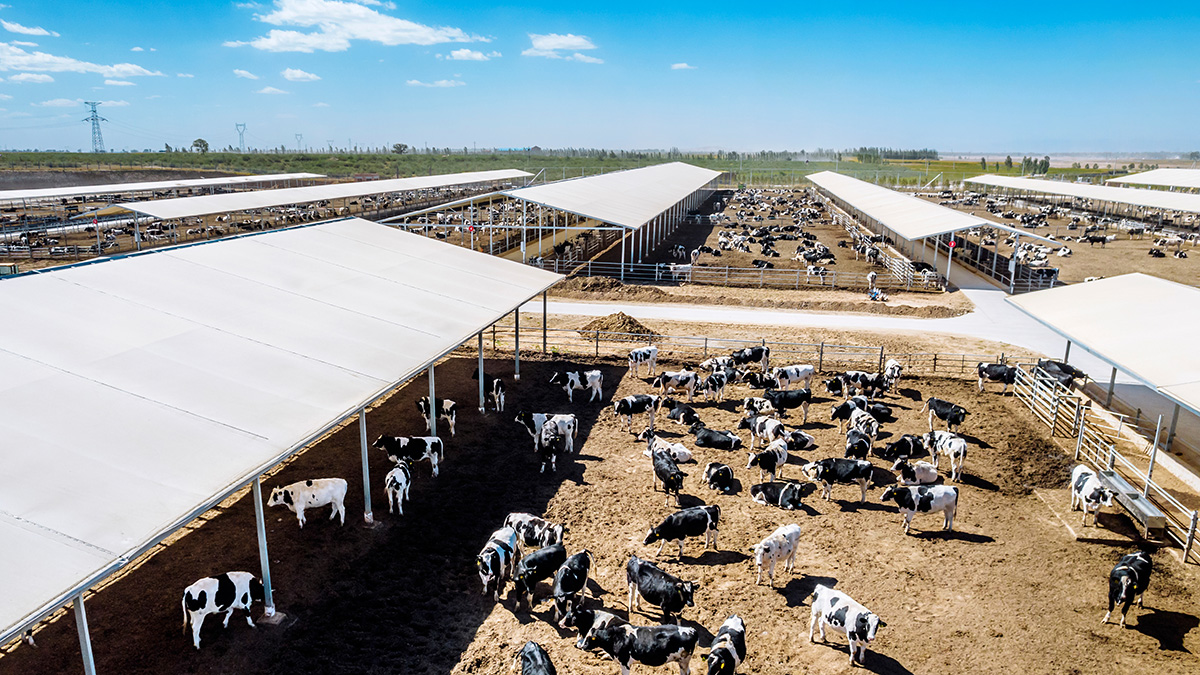
The most visible US case of dairy PFAS contamination originates at Cannon Air Force Base in eastern New Mexico. According to a May 2022 release from the New Mexico Environment Department, routine water well testing in 2018 detected PFAS above acceptable standard levels in the well supplying water to Highland Dairy, a fourth-generation family dairy farm in Clovis (NMED, 2022).
PFAS-contaminated groundwater from Cannon Air Force Base had migrated offsite and reached the dairy's drinking water supply. After the well detection, the New Mexico Department of Agriculture obtained milk samples from the dairy and sent them to FDA for testing. The milk was kept off the market pending results. When the milk tested above FDA's screening level for PFAS, all milk from the dairy was pulled from the market (NMED, 2022).
Highland Dairy was unable to sell products from the farm. Acting on direction from the New Mexico State Veterinarian and the New Mexico Livestock Board, the dairy ultimately humanely euthanized the entire herd of 3,665 cows. The current estimated cost of lost revenue and increased expenses is $5,946,462, a figure that does not include upcoming costs associated with carcass composting and final disposal (NMED, 2022).
The Khanashyam review independently identifies what is almost certainly the same case in its global compilation, citing a "striking case from New Mexico" reporting PFAS concentrations exceeding 5 ng/mL in milk from a dairy farm near a contaminated military base (Khanashyam et al., 2025). The 5 ng/mL data point is the North American end of the Khanashyam regional concentration range.
Highland Dairy's removal plan is described by NMED as the first of its kind nationally for addressing PFAS-contaminated cows as hazardous waste. It was developed in consultation with the USDA Farm Service Agency, the USDA Natural Resources Conservation Service, the NM State Veterinarian, the NM Department of Agriculture, and NMED. The plan proceeds in two phases: first, composting all PFAS-contaminated carcasses on the farm property in accordance with USDA conservation practice standards; second, PFAS analysis of the composted material and associated soil at the compost site to determine final removal and disposal options (NMED, 2022).
The federal indemnification program responded to the case. In late 2021, USDA expanded its Dairy Indemnity Payment Program to provide payments to dairy producers for the lost value of their herd due to contamination from livestock exposure to chemicals including PFAS. Disposal under an approved plan, like Highland Dairy's, is required for the dairy to qualify for indemnity under the program (NMED, 2022).
NMED allocated up to $850,000 from its hazardous waste emergency fund for expenses associated with proper disposal of PFAS-contaminated hazardous carcasses and associated wastes. Including this allocation, the State of New Mexico estimates it has spent and committed over $6 million on PFAS protection (NMED, 2022).
The release records a direct statement from Highland Dairy owner Art Schaap:
"Cannon Air Force Base knows what they have done to the groundwater. They expect military personnel to have integrity, but what they are doing to the Clovis community and the farms near the base does not demonstrate integrity. They need to own the pollution."
The Cannon AFB contamination is one example within a much broader US Department of Defense PFAS legacy. For the technical and regulatory framing of AFFF-driven contamination at military installations and airports, see our analysis of AFFF and PFAS contamination at military installations.
Fat Partitioning and Why Composite Dairy Concentrates PFAS
The PFAS content of dairy is not uniform across product type. Khanashyam and colleagues report that composite dairy products such as cheese and butter have demonstrated PFAS levels as high as 13.34 ng/mL, attributed to concentration during processing. Cheese and yogurt consistently exhibit higher PFAS levels than fluid milk because production processes and fat content affect how PFAS partition and retain in the product (Khanashyam et al., 2025).
Infant formula is a particular concern. Reported infant formula PFAS concentrations reach up to 5.74 ng/mL (Khanashyam et al., 2025). For infants, formula is often the entire nutritional input and represents a body-weight-normalized exposure that exceeds adult intake by a substantial margin.
| Product Type | Reported Maximum PFAS | Driver |
|---|---|---|
| Fluid milk (China, max PFOS) | 9.19 ng/g | Raw product before processing |
| Infant formula | up to 5.74 ng/mL | Infant body weight increases relative exposure |
| Composite dairy (cheese, butter) | up to 13.34 ng/mL | Concentration during processing; fat-content partitioning |
Source: Khanashyam et al. (2025), global review of PFAS in dairy products. Curci et al. (2025) for the 9.19 ng/g China raw-milk maximum.
The fat-content driver matters for how upstream contamination produces downstream concentration. A cow drinking PFAS-contaminated water passes PFAS into her milk. The dairy that processes that milk into cheese, butter, or infant formula increases the per-unit PFAS load further through reduction of water content and partitioning into the fat phase. By the time the product reaches a consumer, the original water concentration has been transformed twice: once by bioaccumulation in the animal, and a second time by processing.
Vulnerable Populations
Both 2025 reviews and the EPA's exposure pathway guidance identify children, toddlers, and infants as the highest-exposure populations relative to body weight (Curci et al., 2025; Khanashyam et al., 2025; EPA, 2026).
The South Africa data illustrates the scale: toddlers in the studied population were estimated to ingest 20.41 ng of PFAS per kilogram of body weight per day from dairy alone, the highest body-weight-normalized intake in the studies Curci and colleagues reviewed (Curci et al., 2025).
Khanashyam and colleagues explicitly identify infants as a population with heightened susceptibility to PFAS health effects, including immune toxicity, carcinogenesis, and developmental impairments (Khanashyam et al., 2025).
EPA's currently published guidance, last updated April 21, 2026, lists potential health effects of PFAS exposure that include reproductive effects (decreased fertility, increased high blood pressure in pregnant women); developmental delays in children (low birth weight, behavioral changes); increased cancer risk (prostate, kidney, testicular); reduced immune function and reduced vaccine response; hormone interference; elevated cholesterol; and obesity risk (EPA, 2026).
The Khanashyam review cites the longer arc of regulatory and surveillance data: a 2002 OECD hazard evaluation identified PFOS as persistent, bio-accumulative, and toxic, linking it to liver and thyroid cancer in rodents. A 2003 CDC report found PFOS in the blood serum of approximately 98% of the US population (Khanashyam et al., 2025). Two decades of subsequent monitoring have not displaced PFOS and PFOA from their position as the most frequently detected PFAS compounds in dairy worldwide.
EPA, FDA, and the Regulatory Gap
EPA's current published understanding identifies dairy products from livestock exposed to PFAS as one of several food-chain bioaccumulation pathways, alongside fish from contaminated water and food packaging materials including grease-resistant paper, microwave bags, and pizza boxes (EPA, 2026). The agency lists biosolids and agricultural fertilizer as one of several environmental sources of PFAS contamination (EPA, 2026).
What the EPA's risk page does not currently include is a numerical PFAS limit for dairy products. The Highland Dairy case illustrates how the US regulatory framework currently operates: FDA screening levels are the trigger that pulls contaminated milk from the market once the contamination has already reached the cow (NMED, 2022). USDA's Dairy Indemnity Payment Program provides payment for the lost herd (NMED, 2022). State environmental agencies, in this case NMED, manage the disposal of contaminated cattle as hazardous waste under what NMED described at the time of the Highland Dairy plan as a "first of its kind" framework (NMED, 2022). The framework activates after the food-side detection. It does not prevent the upstream contamination that drives the loss.
Globally, the regulatory situation is uneven. Khanashyam and colleagues observe that "global efforts to manage chemical pollutants and reduce their environmental footprint" exist within frameworks including several UN Sustainable Development Goals (SDGs 3, 6, 12, 14, and 15), but that "inconsistencies in regulatory approaches hinder effective global management of PFAS risks" (Khanashyam et al., 2025).
Both 2025 reviews call for coordinated national monitoring programs, standardized analytical limits of detection and quantification, and harmonized cross-jurisdictional limits (Curci et al., 2025; Khanashyam et al., 2025). Curci and colleagues identify specific gaps in current research, including insufficient temporal coverage, lack of non-cow milk research, underrepresentation of high-consumption nations, and absence of seasonal trend analysis (Curci et al., 2025). The data is patchy in precisely the places where the regulatory framework would need it to be comprehensive.
What This Means for Source-Side Treatment
The dairy data points back to where upstream treatment investment matters most.
Livestock drinking water is the most direct intervention point in cases where the contamination has been mapped. At Highland Dairy, the contamination chain ran: AFFF training at Cannon AFB → groundwater plume → dairy well → cow → milk → market (NMED, 2022). The chain is interrupted earliest at the water source. Treatment systems on dairy supply wells in proximity to AFFF-impacted installations, biosolids application areas, or industrial discharge points eliminate the pathway before it reaches the animal.
Stormwater and biosolids contamination converge on the same outcome. Stormwater runoff carrying PFAS from AFFF training areas, urban impervious surfaces, and biosolids-amended fields ultimately deposits PFAS in soils, surface water, and groundwater where livestock drink. Our prior analyses of PFAS in stormwater and PFAS in biosolids document the upstream contamination dynamics. The dairy data show what those dynamics produce at the food-chain endpoint.
Composite dairy products concentrate PFAS more than fluid milk does. Dairies that process raw milk into cheese, butter, yogurt, or infant formula multiply the per-unit PFAS load through water-content reduction and fat-phase partitioning. For an investigation prioritizing exposure reduction, raw-milk concentrations understate the consumer-side exposure from processed products by a substantial margin (Khanashyam et al., 2025).
Detection at the food-side is a late signal. The Highland Dairy timeline (2018 well detection, herd loss, $5.9 million in lost revenue and expenses, first-of-its-kind hazardous waste disposal) represents the cost of finding out at the food-side rather than the water-side (NMED, 2022). For municipal water systems serving agricultural areas, AFFF site operators, biosolids application planners, and industrial dischargers in proximity to dairy operations, the calculus favors upstream characterization and treatment over downstream remediation.
Khanashyam and colleagues close their review by stating that addressing PFAS contamination requires "remediation, safer alternatives, and regulations" to achieve "sustainability and protect global health" (Khanashyam et al., 2025). Curci and colleagues call for "comprehensive monitoring and regulatory strategies" to address PFAS contamination in dairy products and safeguard public health (Curci et al., 2025).
PFAS has been managed primarily as a water and soil problem for decades. The dairy data show that it is also a food-chain problem, and that the contamination chain runs through livestock drinking water, animal feed, packaging, and processing equipment. For sites where PFAS exposure of dairy production is possible (military installations, biosolids application areas, stormwater outfalls upstream of agricultural water sources), the dairy literature is a reminder that source-side treatment is not optional. It is the only intervention that does not externalize the problem to the food supply.
Sources
- Khanashyam, A.C., Kanwal, S., Laosam, P., Sangsawad, P., Thorakkattu, P., Bandla, S., Rathnakumar, K., Omanakuttan, A.M., Al-Asmari, F., Bekhit, A.E.A., and Nirmal, N. (2025). "Perfluoroalkyl and polyfluoroalkyl substances contamination in dairy: A global perspective." Science of the Total Environment. https://doi.org/10.1016/j.scitotenv.2025.180968
- Curci, D., Sundaram, T.S., Ghidini, S., and Arioli, F. (2025). "What We Know About per- and Polyfluoroalkyl Contamination Levels in Milk. A Review from the Last Decade." Foods, 14(13): 2274. https://doi.org/10.3390/foods14132274
- U.S. Environmental Protection Agency (2026). "Our Current Understanding of the Human Health and Environmental Risks of PFAS." Last updated April 21, 2026. https://www.epa.gov/pfas/our-current-understanding-human-health-and-environmental-risks-pfas
- New Mexico Environment Department (May 19, 2022). "New Mexico assists Clovis family dairy farm with PFAS contamination." News release. https://www.env.nm.gov/wp-content/uploads/2022/05/2022-05-19-COMMS-New-Mexico-assists-Clovis-family-dairy-farm-with-PFAS-contamination-Final.pdf
Need Source-Side PFAS Treatment for Agricultural or Industrial Water?
PRM designs and deploys treatment systems for PFAS-impacted groundwater, agricultural and dairy supply wells, AFFF-impacted sites, and industrial process water. From skid-mounted carbon and ion exchange systems to complete treatment trains matched to site contaminant profiles, we build systems sized for the contamination upstream so the food supply doesn't have to absorb it downstream.
Contact Our Team