PFAS in Private Wells: The Drinking Water Nobody Is Required to Test
Public water systems operate under federal PFAS limits and scheduled monitoring. Private wells sit outside that framework entirely. Two USGS national studies show the water in them is no cleaner, and North Carolina is among the states with the most private-well users potentially affected.
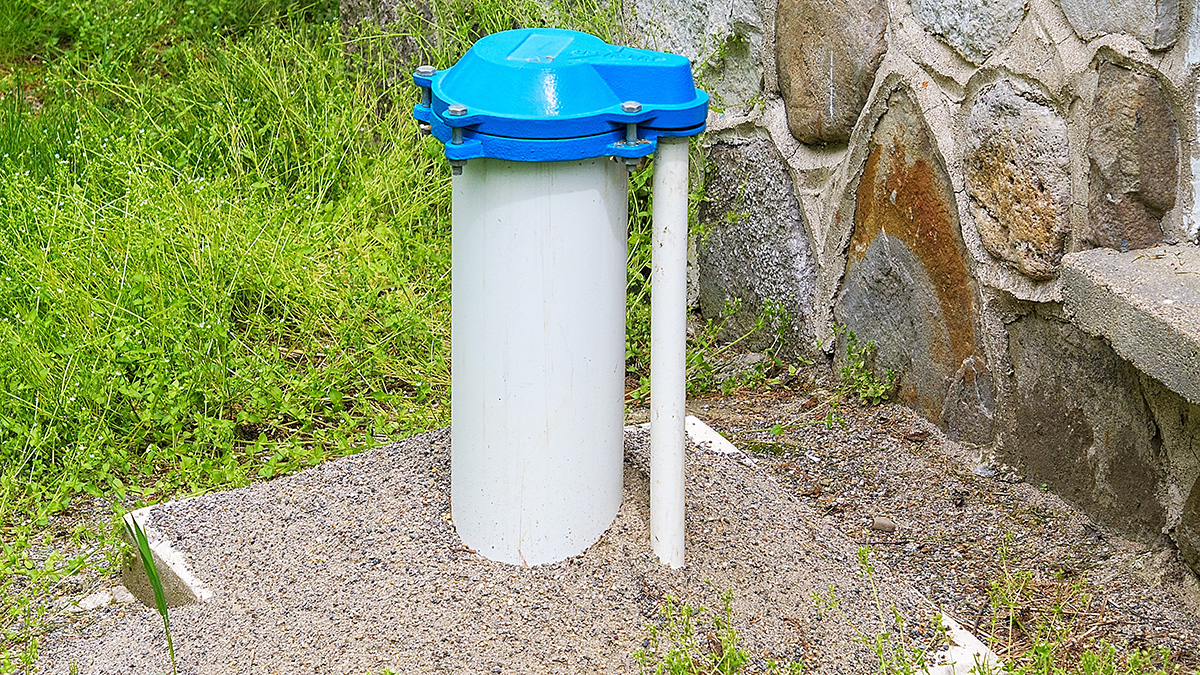
Turn on a tap served by a public water system and the water arriving in the glass is covered by federal PFAS standards and laboratory monitoring. Turn on a tap served by a private well and none of that applies. EPA does not regulate private wells; testing and treating them is the owner's responsibility (US EPA, 2026). The water itself does not honor that administrative boundary. A US Geological Survey study that sampled 716 taps across the country found PFAS concentrations in private wells similar to those in public supplies, and estimated that at least one PFAS could be detected in about 45 percent of US drinking-water samples (USGS, 2023). A second USGS study modeled the groundwater underneath: 71 to 95 million people in the Lower 48 states may rely on groundwater with detectable PFAS for their drinking water, and North Carolina is among the six states with the most private-well users potentially affected (USGS, 2024). This article walks through the regulatory gap, the national data that quantifies it, and the program in North Carolina's Cape Fear region that shows what happens when a contamination plume and thousands of unmonitored wells meet.
Whose Job Is a Private Well?
The regulatory answer is short: the owner's. EPA's guidance page for well owners states it plainly. The agency does not regulate private wells. It advises owners to contact their state environmental or health agency for guidance, to test through state-certified laboratories that use EPA-developed methods, to consider certified in-home treatment where results warrant it, to use alternate water for drinking and food preparation when needed, and to test regularly (US EPA, 2026). Every step in that sequence is voluntary, initiated by the owner, and paid for by the owner unless a state program or a responsible party steps in.
In North Carolina, the gap is unusually wide because the population on wells is unusually large. The state ranks second in the nation for the percentage of residents who rely on well water, at approximately 35 percent (WRAL, 2025). The receptor question follows the contamination sources this series has covered. When NC DEQ required landfill operators to complete receptor surveys, nine landfills determined that private well testing was needed; see our analysis of PFAS in landfill leachate and groundwater. The contamination that ended Highland Dairy's herd in New Mexico was first identified in 2018 during routine testing of the well supplying the dairy. And the plumes that migrate from AFFF-impacted installations do not stop at the property line. In each case, the receptors at the end of the flow path are wells that no regulation requires anyone to check.
What National Sampling Found at the Tap
Until 2023, no one had tested and compared PFAS in tap water from both private wells and government-regulated public supplies at a broad national scale. The USGS study led by research hydrologist Kelly Smalling did exactly that: 716 locations sampled between 2016 and 2021, of which 269 were private wells and 447 were public-supply taps, with water collected directly at the tap where exposure actually occurs (USGS, 2023).
The headline finding is the 45 percent estimate: at least one PFAS could be detected in about 45 percent of US drinking-water samples. The study analyzed 32 individual PFAS and observed 17 of them. PFBS, PFHxS and PFOA appeared most frequently, each in approximately 15 percent of samples. Where PFAS were detected, the number of individual compounds ranged from 1 to 9 (median 2), with cumulative concentrations from 0.348 to 346 ng/L (USGS, 2023).
Two findings matter most for the private-well question. First, PFAS concentrations were similar between public supplies and private wells. The infrastructure differs; the water does not. Second, geography drives probability. The chance of NOT observing PFAS was about 75 percent in rural areas and only around 25 percent in urban areas, with high-exposure regions observed near the Great Plains, the Great Lakes, the Eastern Seaboard, and Central and Southern California (USGS, 2023). Rural wells are less likely to be affected than urban taps, but when they are affected, no monitoring program exists to notice. The study also notes that potential human exposure risk was dominated by PFOA and PFOS when detected, and that measured concentrations exceeded EPA's interim 2022 health advisories for those two compounds in every sample in which they were detected (USGS, 2023).
The Groundwater Underneath
The tapwater study measured what comes out of the faucet. A second USGS effort, led by research hydrologist Andrea Tokranov and published in Science in October 2024, modeled what sits in the aquifers that feed both public wellfields and backyard wells. Using 1,238 groundwater samples and testing for 24 common PFAS out of more than 12,000 that exist, the team built a machine-learning model of where PFAS occurrence is most likely at drinking water supply depths, then combined it with existing USGS research on how many people rely on groundwater in each area (USGS, 2024).
The result is the first national estimate of PFAS occurrence in untreated groundwater supplying both well types: approximately 71 to 95 million people in the Lower 48 states, more than 20 percent of the country's population, may rely on groundwater with detectable PFAS concentrations. The estimates describe the resource before any treatment, which is precisely the condition in which most private-well water is consumed (USGS, 2024).
The model produces separate estimates for public and private wells because the two typically draw from different depths, with public wells usually deeper. For public supplies, Florida and California have the most groundwater-dependent users potentially affected. For private wells, the list is Michigan, Florida, North Carolina, Pennsylvania, New York, and Ohio. State-level results can run high: in Massachusetts, 86 to 98 percent of groundwater-dependent public water users are potentially affected, and in Connecticut, 67 to 87 percent of private well users (USGS, 2024). North Carolina's appearance on the private-well list, combined with its second-in-the-nation reliance on wells, is the bridge from national statistics to the case unfolding in the Cape Fear region.
| Study | Scope | Key Finding for Private Wells |
|---|---|---|
| USGS tapwater study (Smalling et al., 2023, Environment International) | 716 taps sampled 2016-2021: 269 private wells, 447 public supply; 32 PFAS analyzed | About 45% of US drinking-water samples estimated to contain at least one PFAS; concentrations similar between private wells and public supplies |
| USGS groundwater model (Tokranov et al., 2024, Science) | Machine-learning model built on 1,238 untreated groundwater samples; 24 PFAS | 71 to 95 million people in the Lower 48 may rely on groundwater with detectable PFAS; NC among the six states with the most private-well users potentially affected |
Both studies from the US Geological Survey. Groundwater estimates describe untreated water, the condition in which most private-well water is consumed.
When a Plume Finds the Wells: The Cape Fear Program
What happens when the abstract risk becomes a mapped plume is on display around the Fayetteville Works plant in North Carolina. Under a 2019 court-enforceable Consent Order between Chemours, NC DEQ, and Cape Fear River Watch, Chemours was required to stop the discharge of process wastewater, drastically reduce emissions, and provide alternate water for thousands of households whose drinking water wells have been contaminated (NC DEQ, 2026).
The well-testing program that flowed from that order has become a years-long, county-by-county effort. By July 2022, 9,420 wells had been tested within about 25 miles of the plant across Bladen, Cumberland, Harnett, Hoke, Robeson, and Sampson counties. Of those, 1,803 qualified for GAC systems or municipal water, and approximately 4,408 residences qualified for reverse osmosis treatment (NC DEQ, 2026). In March 2025, after a review of existing well data and forecasting of expected contamination areas, the program expanded again: approximately 150,000 additional residences became eligible for testing, reaching further into Harnett and Hoke counties. Eligibility requires that the well serve as the primary drinking water source for the residence, and sampling is conducted by a third-party contractor, Parsons Environment and Infrastructure (NC DEQ, 2026).
The remedy side of the program is a defined menu with defined triggers. The Consent Order sets concentration thresholds that determine what Chemours must provide (NC DEQ, 2026; Port City Daily, 2025):
| Well Test Result | Replacement Water Provided |
|---|---|
| GenX at or above 10 ppt | Granular activated carbon (GAC) system, municipal water connection, or reverse osmosis units for each sink |
| Combined Attachment C PFAS at or above 70 ppt (compounds including PFMOAA, PFO3OA, PFO4DA) | Three under-sink reverse osmosis systems |
| Any individual Attachment C compound at or above 10 ppt | Three under-sink reverse osmosis systems |
Replacement-water thresholds under the 2019 Consent Order (NC DEQ, 2026; Port City Daily, 2025). Chemours must also provide bottled water and evaluate public water feasibility.
In September 2025, the program entered what a Chemours spokesperson described as "the final phase of the private well-testing program," extending eligibility to 14,000 residences in the Lower Cape Fear counties of New Hanover, Brunswick, Columbus, and Pender, of which Chemours estimates only about 2,600 have private wells. By that point, nearly 20,000 residences had been sampled since testing began in 2022. In the Lower Cape Fear area, the counts stood at 1,378 wells tested in Brunswick County, 3,771 in New Hanover, and 3,130 in Pender, with water treatment solutions installed at 868 New Hanover residences, 313 in Brunswick, and 513 in Pender. The spokesperson said "the change will accelerate sampling" (Port City Daily, 2025).
Set aside the litigation history and the numbers tell a receptor story. A single industrial source, one mapped plume at a time, has made roughly 150,000 residences eligible for testing and put treatment systems in more than 1,600 homes in three counties alone. None of those wells was subject to routine monitoring before the program reached it. The program is the exception that proves the rule: absent a consent order or a state initiative, a private well gets tested when its owner decides to pay for a test.
What Response Looks Like for a Well Owner
For well owners outside a defined program area, EPA's guidance sketches the response sequence: test through a state-certified laboratory, and if results warrant, treat or switch to alternate water (US EPA, 2026). On the treatment side, EPA describes three in-home technology categories in deliberately plain language. Charcoal and GAC filters "use carbon to trap chemicals as water passes through them." Reverse osmosis "forces water through an extremely thin barrier that separates chemicals from water." Ion exchange resins are "tiny beads that act like powerful magnets that attract and hold the contaminated materials." Filter costs range from $20 to over $1,000, excluding maintenance, and five accredited certification bodies (CSA Group, IAPMO R&T, NSF, UL, and WQA) evaluate filters, with certifications focused on PFOA and PFOS removal (US EPA, 2026). The media-selection question behind those categories, particularly for short-chain compounds, is one we examined in detail in our comparison of GAC and ion exchange.
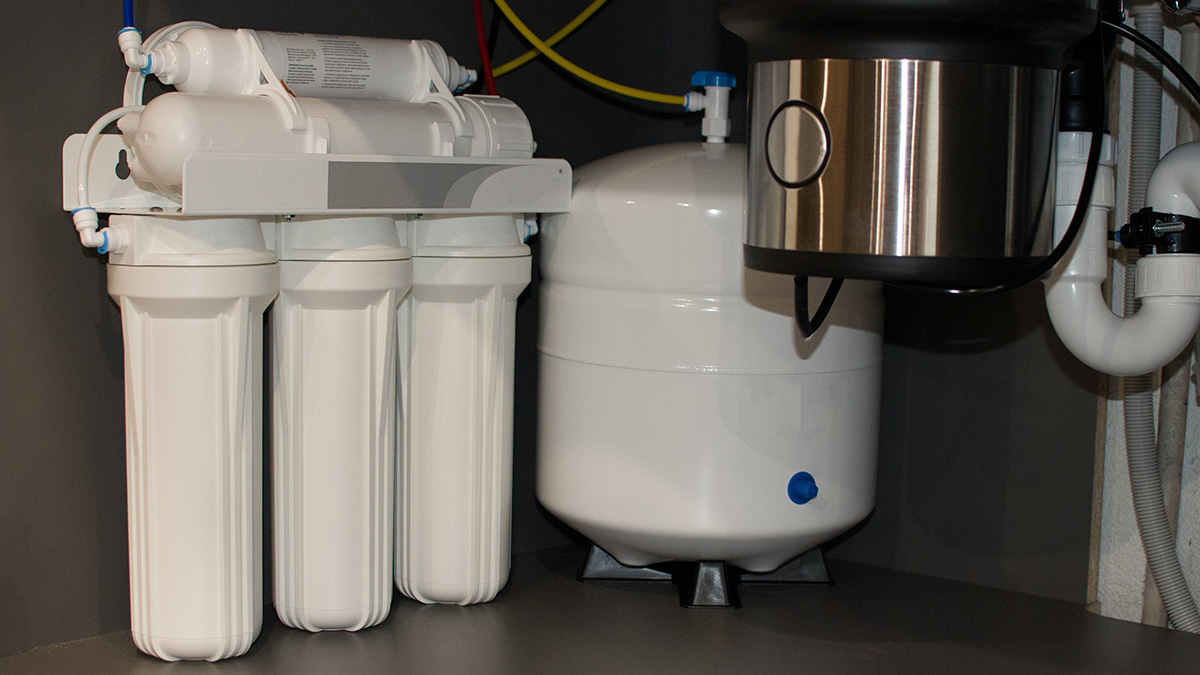
North Carolina has gone a step further than guidance. NC DEQ's Division of Waste Management runs a pilot PFAS Treatment System Assistance Program that reimburses eligible well owners, partially or fully, for treatment systems or public water connections, drawing on the Bernard Allen Emergency Drinking Water Fund. Eligibility is specific: the applicant must own the home, the well must be the sole drinking water source, contamination must be known to exist, no alternative water can be available from a third party, and PFAS must exceed EPA regulatory standards (PFOA or PFOS at 4.0 ng/L; PFNA or PFHxS at 10.0 ng/L; GenX at 10.0 ng/L). Reimbursement is tiered by income, across three system groups: whole-house reverse osmosis or GAC systems and public water connections in Group A at the highest reimbursement level, under-sink point-of-use RO in Group B, and dual-chamber carbon filters in Group C. Funding is first-come, first-served and is not guaranteed to cover full costs (NC DEQ Assistance Program, 2026).
It is worth noticing what both the Consent Order menu and the state program converge on. Whether the payer is a responsible party or an emergency fund, the remedies are the same three: whole-house treatment at the wellhead, point-of-use treatment at the tap, or a connection to a monitored public system. The technologies are the same families this series has followed at municipal scale, sized down to a single household.
Private wells sit outside the monitoring framework that covers public water systems, and the national data shows the water in them is no cleaner: concentrations similar to public supplies, roughly 45 percent of US drinking water carrying at least one PFAS, and 71 to 95 million people over groundwater with detectable PFAS. North Carolina sits high on both lists, second in the nation for well reliance and among the six states with the most private-well users potentially affected. The Cape Fear program shows what closing that gap takes when a plume is mapped: defined thresholds, defined remedies, and years of county-by-county testing. Everywhere else, the sequence starts with a well owner deciding to test.
Sources
- Smalling, K.L., Romanok, K.M., Bradley, P.M., et al. (2023). "Per- and polyfluoroalkyl substances (PFAS) in United States tapwater: Comparison of underserved private-well and public-supply exposures and associated health implications." Environment International, 108033. https://doi.org/10.1016/j.envint.2023.108033. Summarized in US Geological Survey news release, July 5, 2023: Tap water study detects PFAS 'forever chemicals' across the US.
- Tokranov, A.K., et al. (2024). "Predictions of groundwater PFAS occurrence at drinking water supply depths in the United States." Science. October 24, 2024. https://doi.org/10.1126/science.ado6638. Summarized in US Geological Survey news release, October 24, 2024: Millions in the U.S. may rely on groundwater contaminated with PFAS.
- U.S. Environmental Protection Agency (2026). "PFAS in Private Wells." Last updated June 9, 2026. https://www.epa.gov/cleanups/pfas-private-wells
- North Carolina Department of Environmental Quality (2026). "Well Sampling Information for Residents in Bladen, Cumberland, Harnett, Hoke, Robeson and Sampson Counties" and "Chemours Consent Order," GenX Investigation. Accessed July 6, 2026. NC DEQ well sampling information; Chemours Consent Order.
- Fossen, C. (2025). "NCDEQ requires Chemours to expand PFAS well-testing to thousands in Cape Fear." Port City Daily, September 11, 2025. Port City Daily
- North Carolina Department of Environmental Quality (2026). "PFAS Treatment System Assistance Program." Division of Waste Management. Accessed July 6, 2026. https://www.deq.nc.gov/pfas-treatment-system-assistance-program
- McLaughlin, L. (2025). "Toxic PFAS detected in groundwater around NC landfills." WRAL. WRAL (North Carolina well-reliance and landfill receptor survey data points; previously cited in our landfill leachate article).
PFAS Treatment at Every Scale, Down to the Wellhead
PRM designs and builds PFAS treatment systems for drinking water, groundwater, and industrial applications, from municipal plants to small community groundwater systems. For individual homes on private wells, PRM also builds a point-of-entry treatment system. See it in our short walkthrough video, or talk to our team about the water you are responsible for.